Circadian Lighting vs Tunable White: A Commercial Guide
Last updated: 26 October 2026
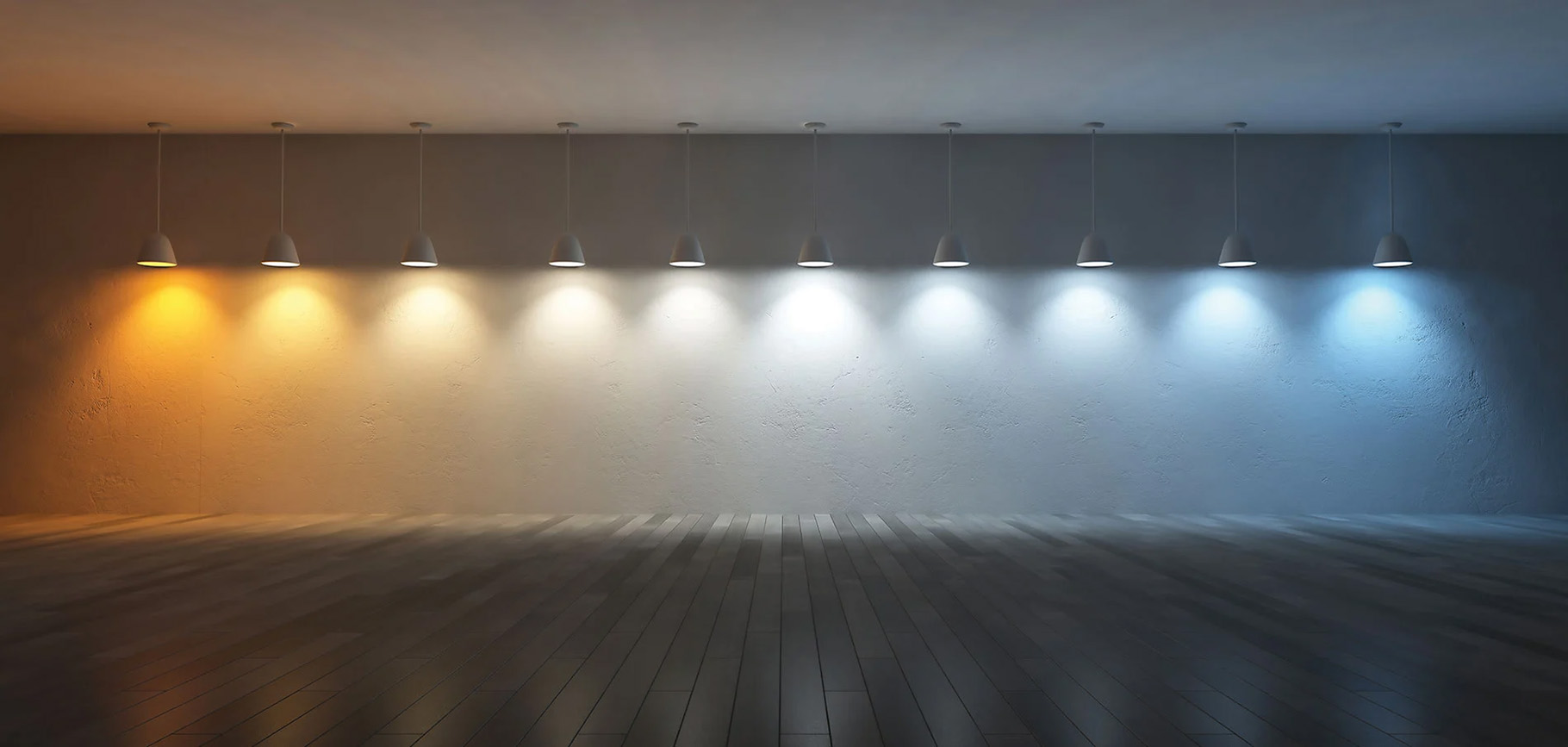
Lighting that shifts between warm and cool, and between soft and bright, suits spaces whose use changes through the day. enLighten founder and CEO Steve Cahill first came across circadian lighting at a conference in Bregenz, Austria, in 2014 and has followed the research since. It is still uncommon in commercial buildings, mainly because of cost, limited technical support and uncertainty about where it works best. This guide explains how circadian lighting differs from tunable white, a more practical alternative for targeted spaces, and where each works best.
What is circadian lighting, and how is it different from tunable white?
Circadian lighting (also called circadian rhythm lighting) adjusts colour temperature and intensity through the day to replicate the natural light cycle. Delivering it across a large, multi-use property is complex and often needs sophisticated automation. Tunable white is the practical alternative: adjustable colour temperature and brightness in targeted areas, controlled manually or automatically, without strictly following the circadian cycle.
Circadian lighting | Tunable white | |
Aim | Follow the natural light cycle | Suit the task or moment |
Typical scale | Large, multi-use properties | Targeted rooms |
Control | Automated schedule | Manual or automated |
Complexity & cost | Higher | Simpler |
Commercial Applications of Tunable White lighting
Colour temperature has many impacts on human (and animal) health and well-being:
Warm Light (2200K - 3000K): Less stimulating, creating a relaxing atmosphere, which makes it ideal for stress-prone settings.
Neutral Light (4000K): Strikes a balance between relaxation and alertness, perfect for general-purpose environments where focus is needed, but comfort is also a priority.
Cool light (5000K+): Has a blueish hue and is more stimulating as it suppresses the production of melatonin, the hormone that regulates sleep-wake cycles. Cool light is typically used to enhance alertness and concentration during daytime activities or in environments that demand high productivity.
Using these principles as a guide there are many ways circadian lighting can be deployed in commercial environments to support specific functions. For example:
Doctor’s waiting rooms/Childcare nurseries: Warm, dim light can help create a calming atmosphere, easing patient anxiety while they wait for their appointments or soothing young children as they prepare them for nap time.
Offices: Neutral light serves as a perfect blend between warm and cool lighting, creating a calm yet productive environment. This light colour also complements the varying daylight hues that enter through office windows and throughout the day.
Exam halls: Cooler, high-intensity light boosts concentration and cognitive performance, making it ideal for exam settings where students need to stay focused.
In each of these examples, the advantage of colour tunable lighting is the ability to adjust settings as situations change. For instance, a school hall may need cooler light during exam time to help students concentrate, while neutral light during assemblies creates a balanced, welcoming atmosphere. For more on how lighting affects focus and wellbeing in schools, see our article on the impact of light on learning and wellbeing.
These examples illustrate how lighting can positively impact a business’s operations. Additionally, by focusing on smaller, contained areas such as waiting rooms, exam halls, or childcare nurseries, controlling the lighting becomes simpler, and costs can be reduced by limiting the lighting solution to key areas where it is most effective.
Which enLighten luminaires come in tunable white?
Skyline LED Panel: a low-glare backlit panel for offices, schools and waiting rooms.
DL200 downlight: a 90mm cutout downlight for office meeting rooms, foyers, waiting rooms and retail spaces.
How are circadian and tunable white lighting systems controlled?
Choose the control system that suits the building:
DALI-2 (DT8): a wired solution that allows precise adjustment of colour temperature and brightness, and integrates tunable white into an existing DALI installation.
Casambi: a Bluetooth low energy wireless mesh, controlled through an app on a smartphone or tablet, with scheduling, tunable white and scene setting.
Koolmesh: a similar wireless mesh system, controlled by app or web browser.
FAQs about tunable white lighting
What is tunable white lighting?
Is tunable white the same as circadian lighting?
What colour temperature suits which space?
See Tunable White Lighting in action at enLighten
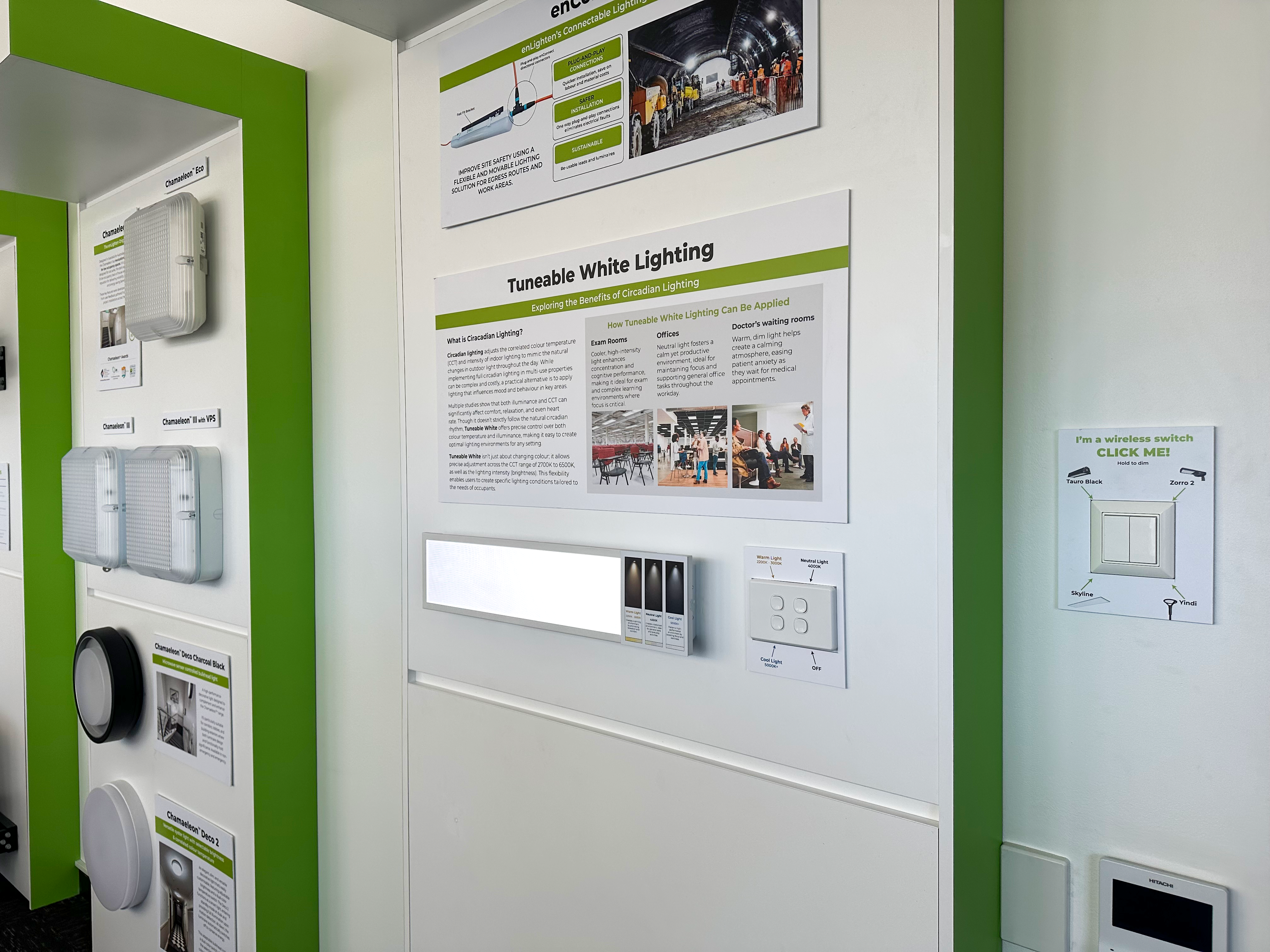
At enLighten, we have a colour-tunable panel on display in our showroom, complete with simple controls to demonstrate how this can be deployed. If you’re interested in learning more or would like a demonstration, please reach out to sales@enlighten.com.au.